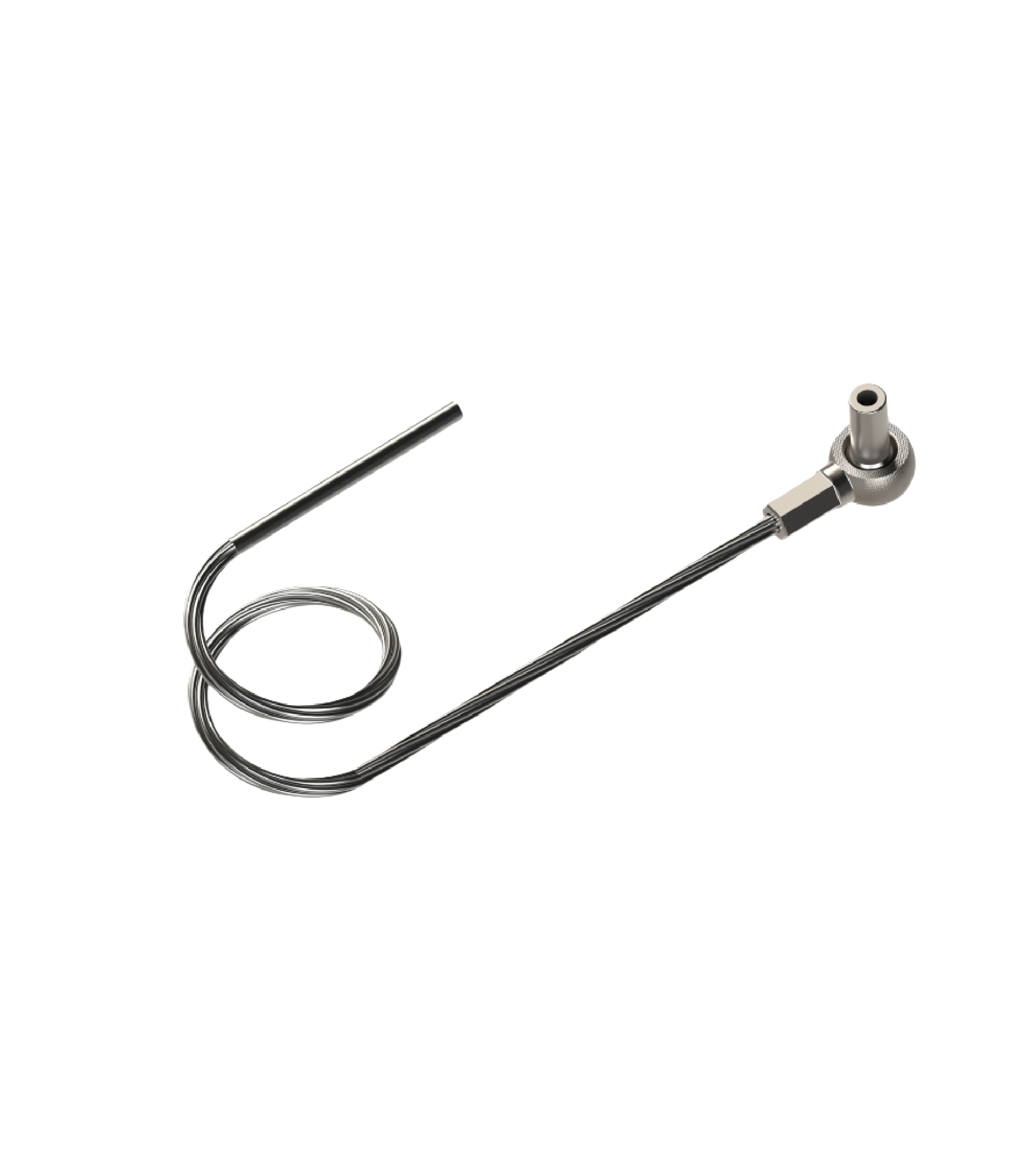
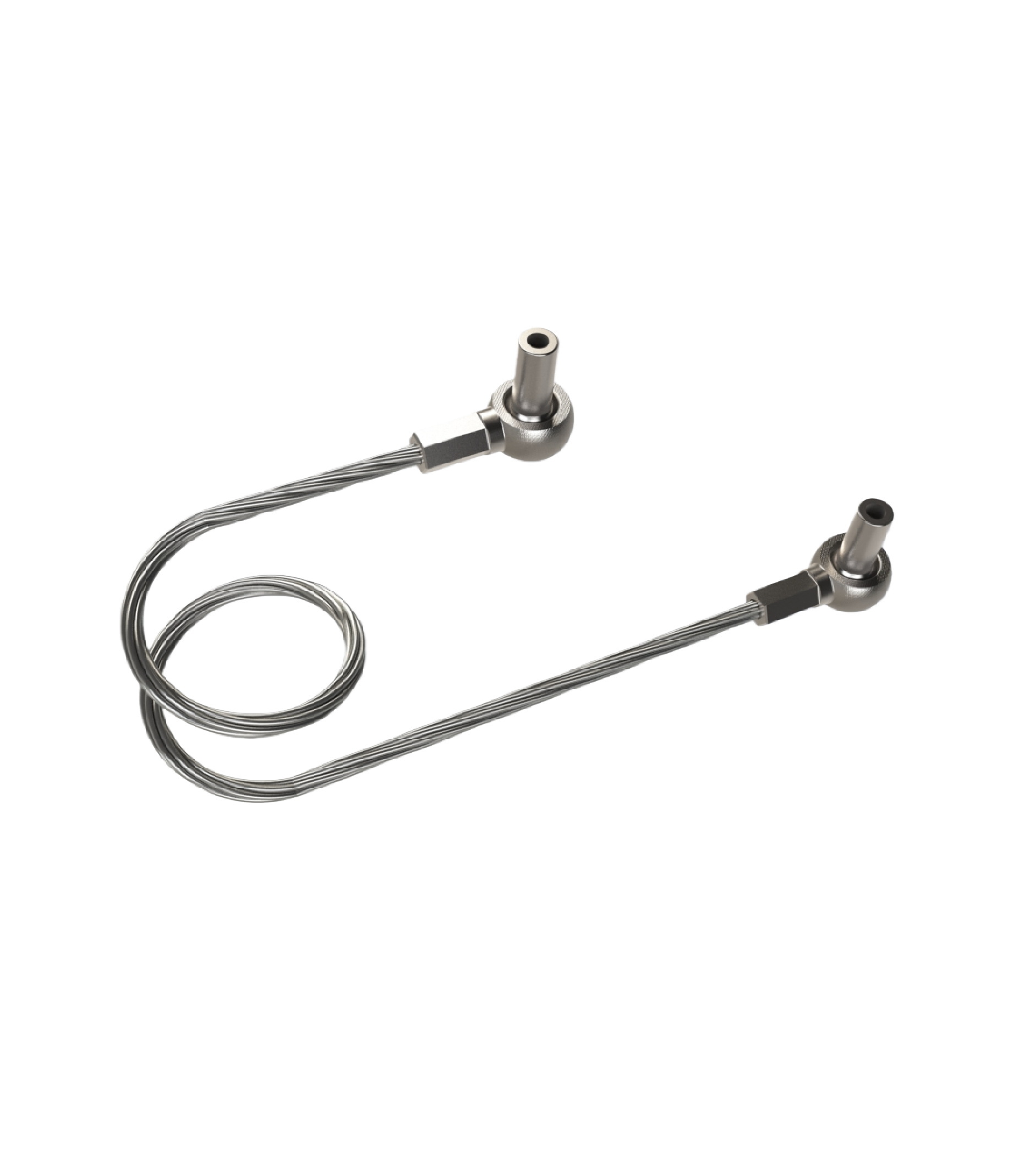
•Titanium cables exhibit high tensile strength, enabling the provision of robust supportive force during surgical procedures to facilitate the fixation of fracture sites or unstable regions.
•Titanium and its alloys possess excellent biocompatibility, which mitigates the risks of foreign body reactions and infections, rendering them suitable for long-term implantation in the human body.
•In comparison with rigid metal rods or other fixation devices, titanium cables possess a certain level of flexibility, enabling better adaptation to the natural curvature and movement of the spine and reducing the pressure exerted on surrounding tissues.
•Titanium cables can be flexibly secured around spinous processes or other skeletal structures, thereby providing multi-directional support.
•Unlike rigid internal fixation devices (e.g., steel plates and screws), titanium cables permit micromotion, which alleviates the stress shielding effect and reduces the risk of adjacent segment degeneration.
•Implantation can be achieved via a small incision, minimizing damage to muscles and soft tissues.