From Pseudopod Anchoring to Deep Osteogenesis: 3D-Printed Four-Grade Biomimetic Hydrophilic Trabecular Implant Enables Full-Thickness Bone Ingrowth

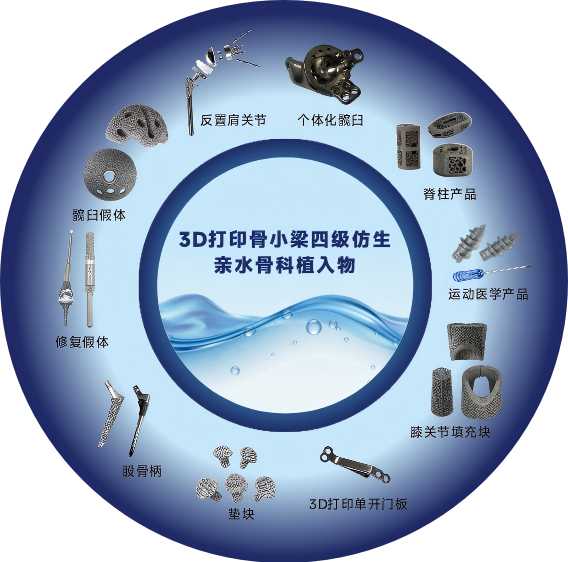
Human cancellous bone constitutes an intricate multi-level porous network. Interwoven trabecular struts with appropriate sizes form hierarchical features ranging from nano-pits and micro-pits to inter-trabecular spaces, which collectively support mechanical transmission, supply cells and blood vessels, and facilitate dynamic bone remodeling. Chunli Medical innovatively develops a **3D-printed four-grade biomimetic hydrophilic trabecular orthopedic implant**. Inspired by native human trabecular bone, it constructs a multi-scale pore system that hierarchically matches physiological logic. It realizes bionic simulation covering the whole chain from cell adhesion to tissue ingrowth, further improving the structural consistency between the implant and host bone.
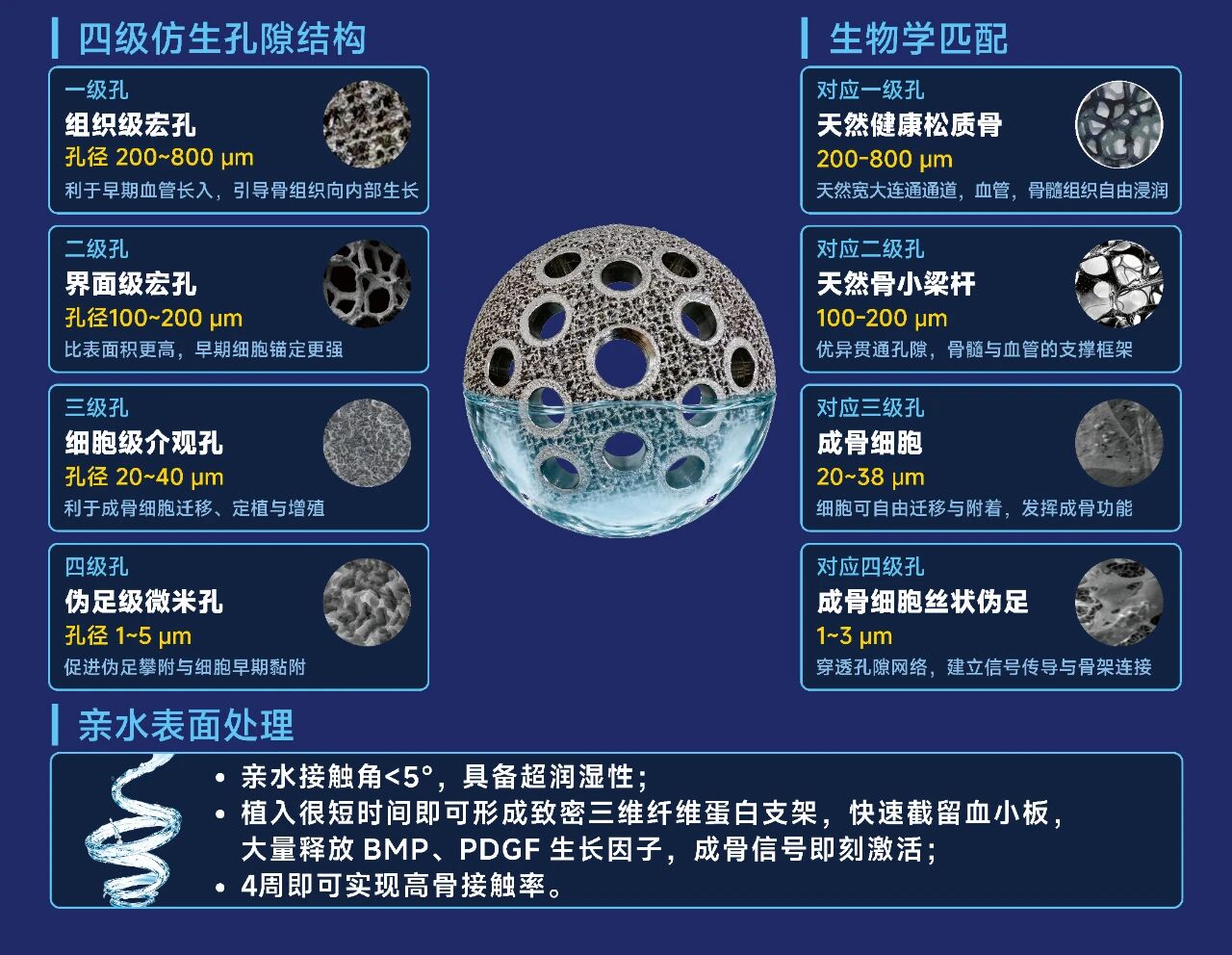
Chunli establishes a four-level functional pore system. Each grade of pore size serves a distinct biological function, precisely replicating the hierarchical structure from the surface depressions to internal voids of native trabeculae:
· Pseudopod-scale micropores (1–5 μm)
Designed to mimic native micro-depressions on trabecular surfaces. The pore size is smaller than osteocytes, so cells cannot migrate into the pores as a whole. Instead, cell pseudopods can insert and anchor here. The pores rapidly adsorb plasma proteins and activate focal adhesions, acting as the first stage of early osteogenesis.
· Cell-scale mesopores (20–40 μm)
As secondary interconnected pores, they accommodate the residence, spreading and differentiation of individual osteoblasts and stem cells, optimize the exchange of nutrients and metabolites, and form microchannels for cell migration into the lattice interior.
· Interface-scale macropores (100–200 μm)
Matching the thickness of native trabecular struts (Tb.Th 100–200 μm), these pores are mainly arranged in the surface porous layer of the implant. The high specific surface area enhances mechanical interlocking, strengthens anchorage at the prosthesis-bone interface, and secures primary postoperative stability.
· Tissue-scale macropores (200–800 μm)
Corresponding to inter-trabecular spaces of native cancellous bone. The ample space enables ingrowth and penetration of capillaries and newly formed bone tissue. Among this range, 300–600 μm represents the optimal window for vascularization and bone infiltration, while 500–800 μm closely resembles native cancellous bone.
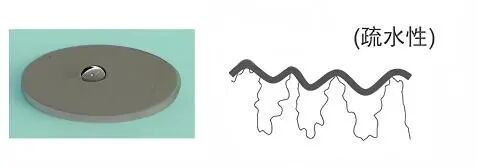
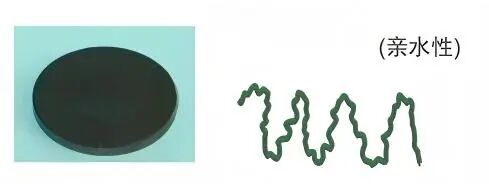
Built upon the four-grade biomimetic lattice structure, the implant is treated with a hydrophilic surface process. The hydrophilic surface accelerates body fluid infiltration and uniform clot spreading, further maximizing the biological benefits of the hierarchical porous architecture. Pseudopod-scale micropores capture proteins more rapidly, cell-scale mesopores improve cell seeding efficiency, and macroporous channels facilitate nutrient transport. This creates a continuous positive cascade covering early cell attachment, mid-term cell differentiation and late-stage deep bone ingrowth, and helps boost osseointegration efficiency.
1.Superior biomimicry with high structural consistency to native trabecular bone Rather than copying a single pore size, the design replicates the hierarchical pore features of cancellous bone across multiple scales. It matches both microscale surface topography and large tissue-scale pores, bridging the structural gap between the implant and host bone.
2.Functionally stratified design balancing immediate stability and long-term integration The superficial interface-scale macropores provide immediate anchorage and anti-subsidence performance; internal tissue-scale macropores support deep infiltration of blood vessels and bone tissue; pseudopod-scale and cell-scale pores on strut surfaces regulate cellular signaling. It achieves both early fixation and mid-to-long-term osseointegration.
3.Optimized mechanical properties to reduce stress shielding The lattice modulus is close to that of human cancellous bone. Load is transferred along physiological pathways, mitigating stress shielding and lowering the risks of bone resorption and implant loosening.
4. Widely interconnected channels to reduce pore blockage Synergistic hierarchical pores maintain unobstructed channels for continuous exchange of cells, blood vessels and nutrients, laying a foundation for durable and reliable osseointegration.
Chunli Medical’s 3D-printed four-grade biomimetic hydrophilic trabecular implant adopts native trabecular bone as the template. Combining multi-scale hierarchical porosity and hydrophilic modification, it achieves biomimetic breakthroughs spanning cellular and tissue levels. It delivers an improved biological fixation solution for clinical scenarios including spinal fusion, joint revision and bone defect reconstruction.
Company Introduction
Chunli Dental · Ingenuity and Intelligence
Beijing Chunli Zhengda Medical Instrument Co., Ltd. (referred to as Chunli Medical) was founded in 1998. It specializes in the R&D, manufacturing and sales of medical devices covering orthopedics, dentistry, biomedical materials and surgical robots. Over nearly three decades of development, Chunli Medical has become the only A+H listed enterprise in both orthopedic and dental sectors.It hosts national R&D platforms including the National Enterprise Technology Center and National Postdoctoral Research Station. The company is recognized as a National Manufacturing Single-Champion Enterprise, National High-Tech Enterprise, National Specialized, Sophisticated, Distinctive and Innovative "Little Giant" Enterprise, National Intellectual Property Advantage Enterprise, and Zhongguancun High-Tech Enterprise.Chunli Medical leads two National Key R&D Programs. It is the only domestic enterprise that widely applies tantalum metal across full product lines for dentistry, joint, spine and sports medicine. The company has led five "Challenge List" projects initiated by the Ministry of Industry and Information Technology, advancing the industrialization and clinical adoption of magnesium alloy, hydroxyapatite and tantalum metal in domestic dental applications. Its surgical robot "Challenge List" project was awarded the title of Winner Unit, accelerating the R&D and clinical rollout of domestic surgical robots.Upholding the R&D and manufacturing philosophy of “Chunli Dental, Ingenuity and Intelligence”, Chunli Medical has built a one-stop comprehensive dental solution portfolio covering orthodontics, implantology, prosthodontics, maxillofacial surgery and surgical robots, making it one of the brands with the most complete dental product lines. Guided by its corporate tenet “Inherit the essence of predecessors, develop premium products for all” and quality policy “Treat as for oneself, keep innovating”, the company rigorously controls the quality of dental products. Supported by national-level platforms and key projects, it pursues deep collaboration across industry, academia, research, clinical practice and inspection, develops dental products adapted to Chinese population characteristics, delivers high-quality products to global customers, and strives to become a world-renowned dental enterprise.