【Product Recommendation】Bid Farewell to Bone Cement Concerns! Easing Burdens for Surgeons and Patients Alike

Unicompartmental Knee Arthroplasty (UKA) serves as a core joint-preserving procedure for end-stage unicompartmental knee osteoarthritis and focal osteonecrosis. Nevertheless, cemented conventional prostheses still present clinical challenges including cement-related complications and difficult long-term revision, even in patients with good bone stock. Biological fixation technology achieves osseointegration between the prosthesis and host bone, offering a new strategy to address the above limitations.
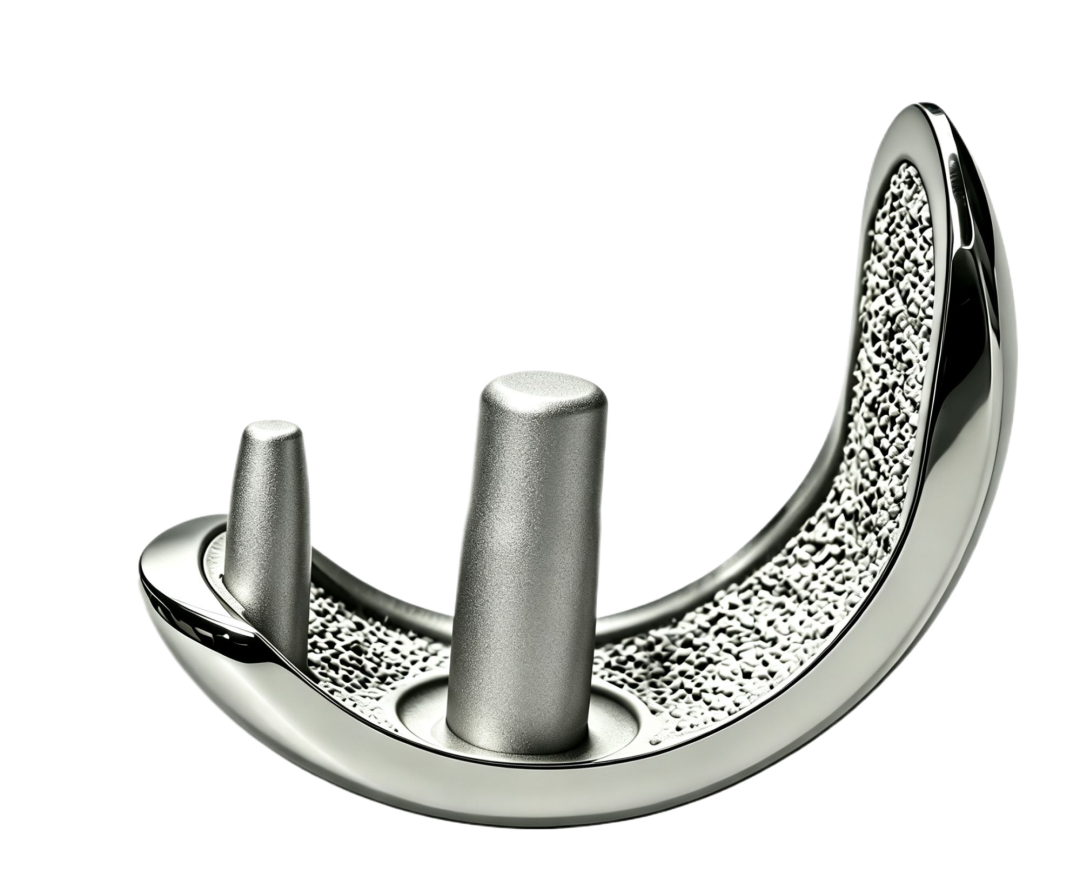
The cementless unicompartmental knee prosthesis with Ti+HA composite coating features a biomimetic spherical femoral condyle and optimized tibial baseplate. It delivers prominent benefits in facilitating bone ingrowth, restoring physiological kinematics, preserving native bone stock and reducing the risk of long-term loosening. It provides surgeons with an evidence-based, practical cementless joint-preserving solution to help more patients achieve durable and stable postoperative functional recovery.
With population aging and rising sports injuries, the incidence of unicompartmental knee lesions keeps increasing. Guided by the joint-preserving philosophy, UKA has emerged as a vital alternative to Total Knee Arthroplasty (TKA), thanks to its advantages of less trauma, reduced blood loss, faster rehabilitation and preserved proprioception. However, conventional UKA mostly adopts cement fixation. For patients with sufficient bone reserve and longer life expectancy, bone cement may trigger cardiovascular toxicity, osteolysis and aseptic loosening, accompanied by substantial bone loss during revision. Biological fixation achieves mechanical interlock and biological bonding between the porous prosthesis surface and host bone to mitigate these drawbacks. The approval and launch of the cementless unicompartmental knee prosthesis marks a major breakthrough for domestic UKA in the field of biological fixation.
Long-term stability of cementless prostheses relies on bone ingrowth performance. Accordingly, the non-articular surfaces of the femoral condyle and tibial baseplate of this cementless UKA prosthesis adopt plasma-sprayed pure titanium (Ti) combined with hydroxyapatite (HA) composite coating.
1、Structural support of pure titanium coating
Pure titanium boasts favorable biocompatibility and corrosion resistance. Its porous structure forms a three-dimensional scaffold for newly formed bone tissue and promotes the migration, proliferation and differentiation of osteocytes, enabling the transition from initial mechanical stability to long-term biological stability.
2、Bioactivity induction of hydroxyapatite
HA has a chemical composition similar to human bone mineral, with outstanding osteoconductivity and osteoinductivity. Studies demonstrate that HA coating possesses excellent osteoconductive activity, accelerating osteoblast adhesion and nodule mineralization and shortening the osseointegration period.
3、Synergistic effect of the composite
The Ti coating provides mechanical anchorage while the HA coating improves biological affinity. Their combination secures coating bonding strength and boosts bone ingrowth efficiency, thereby lowering the risk of prosthetic aseptic loosening, especially for patients demanding high long-term implant survival.
Long-term stability of cementless prostheses relies on bone ingrowth performance. Accordingly, the non-articular surfaces of the femoral condyle and tibial baseplate of this cementless UKA prosthesis adopt plasma-sprayed pure titanium (Ti) combined with hydroxyapatite (HA) composite coating.
1、Restoration of physiological kinematics
The spherical design replicates the rolling-gliding composite motion of the native femoral condyle during flexion and extension. It avoids point contact or edge loading at specific flexion angles seen in conventional non-spherical designs, preserving the natural range of motion and proprioception of the knee.
2、Optimized contact stress distribution
Full congruent contact maintains maximum surface contact between the polyethylene insert and mating component across all flexion angles, markedly reducing interfacial contact stress and wear rate. It minimizes osteolysis triggered by wear particles and extends implant service life.
3、Precise reconstruction of soft tissue balance
The spherical geometry closely matches anatomical references, assisting surgeons in accurately restoring the lower limb mechanical axis and joint line intraoperatively. It maintains cruciate and collateral ligaments at physiological tension and reduces early failure risk caused by malalignment.
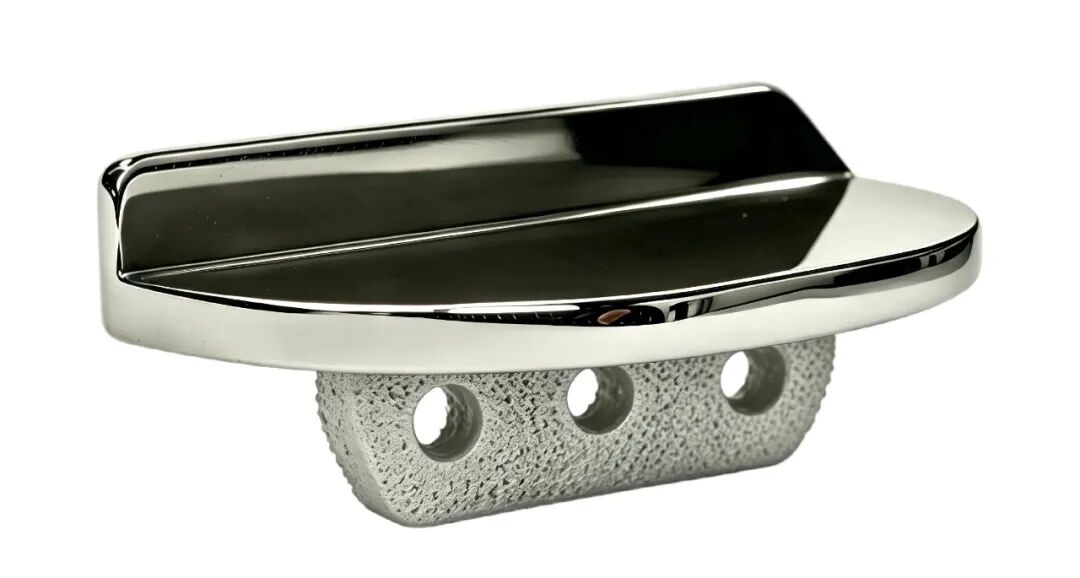
The tibial side is a high-risk region for loosening and subsidence after UKA. The tibial baseplate of Chunli cementless UKA balances load dispersion and bone protection:
1、Uniform load transfer
The baseplate distributes the concentrated load transmitted from the femoral condyle evenly to the underlying bone bed, reducing bone resorption and microfractures induced by localized stress concentration. The central keel is seated into the bone slot to form mechanical interlock, improving anti-rotation and anti-shear performance.
2、Minimized bone resection and bone stock preservation
Compared with TKA and conventional cemented UKA, this baseplate features a smaller profile and requires less bone resection, maximally preserving native tibial bone stock. Aligned with the joint-preserving and minimally invasive philosophy, this design reserves sufficient bone stock for potential revision surgery in the long run, embodying the design principle of prioritizing patients’ long-term benefits.
As a cementless prosthesis, this product is indicated for medial compartment knee arthroplasty. Its primary target population includes patients with adequate bone stock, relatively young age, and no severe osteoporosis or inflammatory arthritis. For these patients, biological fixation reduces cement-associated risks and delivers more durable stability via reliable osseointegration.
It is worth noting that cementless UKA demands high standards of intraoperative press-fit technique. Tight apposition between the prosthesis and bone bed must be achieved to obtain initial stability. Further research will explore precise implantation workflows combined with robot-assisted surgery.
Conclusion
Cementless UKA represents the industry trend of joint-preserving therapy toward greater physiological fidelity, long-term stability and personalized care. With the continuous integration of materials science, manufacturing technology and digital orthopedics, cementless unicompartmental knee prostheses are expected to become an important treatment option for patients with unicompartmental knee lesions, supporting the implementation of the Healthy China Initiative in orthopedics.